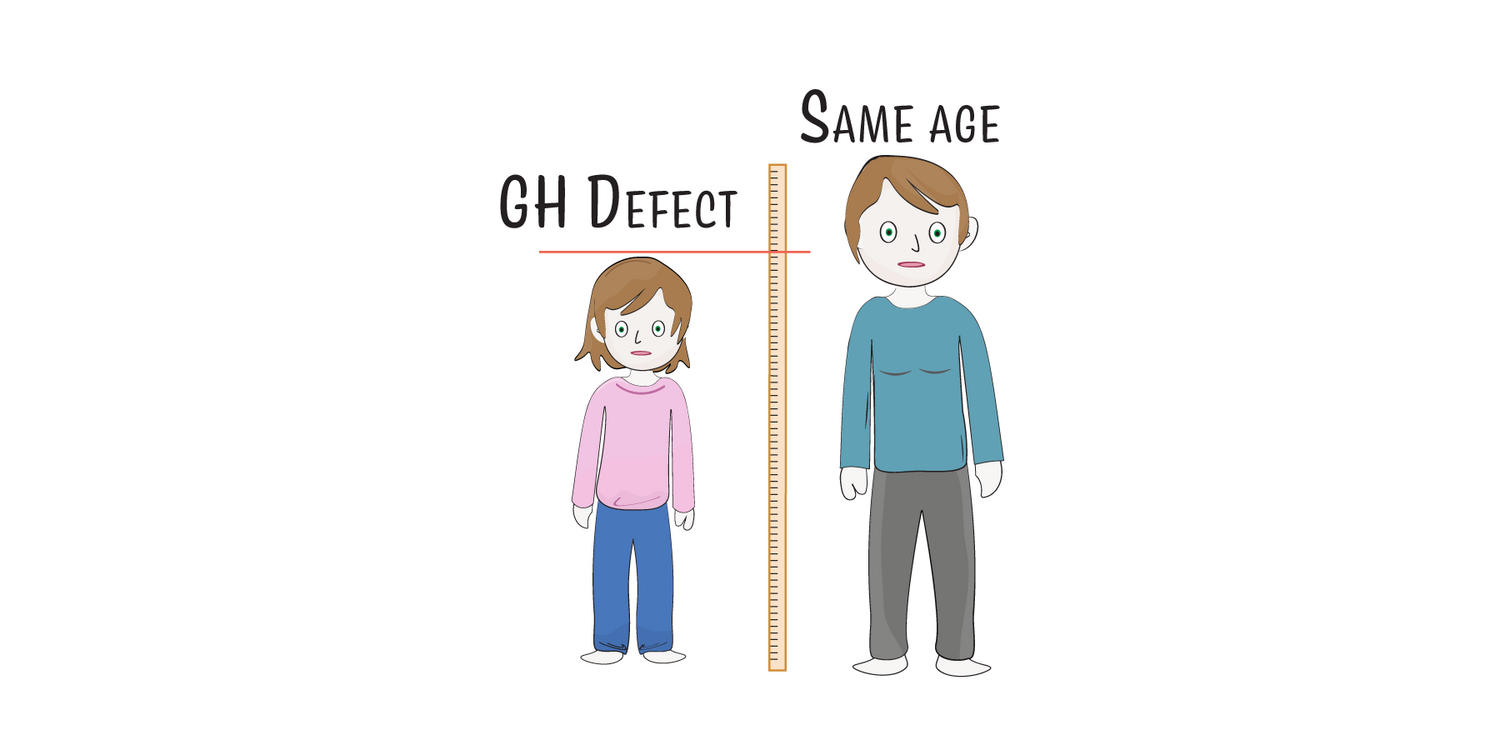
One of the most important tools pediatricians use to monitor a child's health is the growth chart.
During routine checkups, height and weight measurements are plotted over time to create a picture of how a child is growing compared to other children of the same age and sex.
Most parents focus on the number.
Doctors focus on the pattern.
If you've noticed a growth chart percentile dropping in your child, it may be one of the earliest signs that growth is not progressing as expected. Parents then ask why is my child shorter than classsmates.
Importantly, a child does not need to be very short for this to matter.
In fact, a child can remain average height while still experiencing a significant growth concern if their percentile steadily declines over time.
Understanding what a falling growth percentile means can help parents recognize potential issues early and determine when a professional growth evaluation may be appropriate.
What Does a Growth Percentile Mean?
Growth charts compare a child's height to thousands of children of the same age and sex.
For example:
- 75th percentile = taller than approximately 75% of children
- 50th percentile = average height
- 25th percentile = taller than approximately 25% of children
Healthy children typically follow a relatively consistent growth curve.
Some children naturally track near the top of the chart.
Others naturally track lower.
What matters most is that they generally remain on the same curve over time.This can help parents when they ask how tall will my child be.
What Is a Growth Percentile Drop?
Short stature child: when to worry. A percentile drop occurs when a child begins crossing growth percentiles downward.
Examples include:
- 75th percentile → 50th percentile → 25th percentile
- 50th percentile → 25th percentile → 10th percentile
- 25th percentile → 10th percentile → 3rd percentile
This pattern suggests that growth is slowing relative to peers.
Doctors often consider this more concerning than simply being short.
A child who has always been small may be perfectly healthy.
A child who is gradually falling off their growth curve deserves closer attention.
Why Growth Chart Changes Matter More Than Height
One of the most common misconceptions is that only very short children need evaluation.
In reality, many growth disorders first appear as a declining percentile rather than obvious short stature.
A child who was previously average height but begins falling behind peers may be experiencing:
- Reduced growth velocity
- Delayed skeletal maturation
- Hormonal changes
- Nutritional deficiencies
- Early puberty changes
- Underlying medical conditions
The body is essentially signaling that growth timing has changed.
Common Causes of a Growth Chart Percentile Dropping in a Child
1. Constitutional Growth Delay (Late Bloomers)
One of the most common explanations for a declining growth percentile is Constitutional Growth Delay.
These children often grow normally during early childhood before slowing during elementary school.
Because puberty occurs later, they continue growing longer and frequently catch up during adolescence.
Common clues include:
- Younger appearance compared to peers
- Delayed puberty
- Family history of late puberty
- Delayed bone age
- Later growth spurt
Many children with constitutional growth delay ultimately achieve a normal adult height.
2. Poor Growth Velocity
A declining percentile is often the earliest sign of Poor Growth Velocity.
Growth velocity refers to how many inches a child grows each year. Parents here often ask why my child not growing in hieght.
Average growth rates include:
- Ages 4–10: approximately 2–2.5 inches per year
- Puberty: approximately 3–5+ inches per year
Children growing less than 2 inches per year after age 5 may require additional evaluation.
Growth velocity often declines before short stature becomes obvious. These are signs that show slow growth in children causes.
3. Growth Hormone Deficiency
Growth hormone plays a critical role in bone growth and development.
Children with Growth Hormone Deficiency often show a gradual decline on growth charts long before becoming significantly short. Here are some of the signs your child may need growth hormone testing.
Possible signs include:
- Falling percentiles over several years
- Delayed bone age
- Delayed puberty
- Younger appearing facial features
- Increased abdominal body fat
- Delayed tooth eruption
Early diagnosis can significantly improve long-term outcomes.
4. Low IGF-1 Levels
Insulin-like Growth Factor 1 (IGF-1) helps mediate the effects of growth hormone.
Children with Low IGF-1 may experience:
- Reduced growth velocity
- Delayed growth spurts
- Delayed skeletal maturation
- Ongoing percentile decline
IGF-1 testing is commonly included during pediatric growth evaluations.
5. Thyroid Disorders
Thyroid hormone is essential for normal growth and skeletal development.
Even mild hypothyroidism can gradually slow growth.
Potential symptoms include:
- Fatigue
- Constipation
- Weight gain without height gain
- Brain fog
- Slowed school performance
Growth chart changes are often among the earliest warning signs.
6. Nutritional and Absorption Problems
Children may eat normally but still struggle to absorb the nutrients required for growth.
Potential causes include:
- Celiac disease
- Food intolerances
- Chronic gastrointestinal inflammation
- Malabsorption disorders
In some cases, declining height percentile is the only noticeable symptom.
7. Delayed Bone Age
A Delayed Bone Age often provides important clues when evaluating a declining growth percentile.
Bone age is determined using an X-ray of the left hand and wrist.
A delayed bone age may indicate:
- Additional growth potential remains
- Skeletal maturation is occurring more slowly
- Future growth opportunities still exist
Delayed bone age is frequently seen in constitutional growth delay and growth hormone deficiency.
8. Early Puberty
Many parents are surprised to learn that early puberty can eventually cause a child to fall behind peers.
Children entering puberty early often grow quickly at first.
However, growth plates may close sooner, causing growth to stop earlier than expected.
Over time, percentile decline may occur as classmates continue growing.
9. Pituitary Disorders
The pituitary gland regulates several hormones responsible for growth and development.
Certain Pituitary Disorders may affect:
- Growth hormone production
- Thyroid regulation
- Puberty timing
- Bone maturation
Although uncommon, these conditions should be considered when growth patterns become abnormal.
When Parents Should Seek Evaluation
Parents should consider a growth evaluation if:
- Their child crosses down two or more percentile lines
- Growth slows below 2 inches per year after age 5
- Clothing sizes stop changing annually
- Puberty appears unusually early or delayed
- The child becomes significantly shorter than predicted family height
- Other symptoms accompany growth changes
- Small for gestational age
A declining growth percentile is often the earliest detectable sign of a treatable condition.
How Doctors Evaluate a Falling Growth Percentile
A comprehensive pediatric growth assessment may include:
- Growth chart review
- Growth velocity analysis
- Bone age X-ray
- IGF-1 testing
- Thyroid testing
- Nutritional screening
- Puberty hormone evaluation
- Adult height prediction calculations
These tools help determine whether a child is simply developing later than average or has an underlying medical condition affecting growth.
Treatment Options for Children With Growth Concerns
Treatment depends entirely on the underlying cause.
Potential options may include:
- Nutritional intervention
- Treatment of thyroid disorders
- Monitoring constitutional growth delay
- Management of chronic medical conditions
- Sermorelin therapy for children in appropriate cases
- Human Growth Hormone (HGH) therapy for children for qualified patients with confirmed deficiencies
The goal is not to make children unusually tall.
The goal is to help them achieve their natural genetic growth potential.
Why Early Action Matters
Growth plates eventually close after puberty.
Once growth plates close, significant additional height gain is no longer possible.
A falling percentile often appears years before a child becomes obviously short, creating a valuable opportunity for early evaluation and intervention.
Acting early can provide more options and better long-term outcomes.
The Bottom Line
A growth chart percentile dropping in a child does not automatically mean something is wrong.
However, it is one of the earliest signals that growth timing may be changing.
Healthy children generally follow the same growth curve throughout childhood.
When that curve changes, it deserves attention.
Recognizing a falling percentile early allows parents and physicians to identify treatable conditions, distinguish normal developmental variation from medical concerns, and help children reach their natural height potential.
Medically Reviewed by Dr. Devin Stone, ND
Dr. Devin Stone is a naturopathic physician focused on pediatric growth evaluation and evidence-informed approaches to childhood growth concerns. His clinical work includes growth velocity assessment, bone age interpretation, IGF-1 evaluation, puberty timing analysis, and pediatric growth optimization.
Medical References
Devin Stone
Contact Me

Growth Chart Percentile Dropping in a Child FAQs
Frequently Asked Questions
No. Some children experience temporary changes in growth patterns. However, persistent percentile decline deserves evaluation.
Crossing two or more percentile lines downward is generally considered significant.
Yes. Many growth disorders first appear as a declining percentile before obvious short stature develops.
Constitutional Growth Delay and Poor Growth Velocity are among the most common explanations.
Doctors commonly use growth charts, bone age X-rays, family height calculations, and puberty assessment.
