Starting growth hormone injections can feel intimidating for parents.
Even after you've learned how to use the pen or syringe, questions often come up once you're home:
Where exactly should I give my child's HGH injection?
Do I need to use a different body area every night?
What if there is redness, bruising, or a small lump?
Does the injection site affect how well growth hormone works?
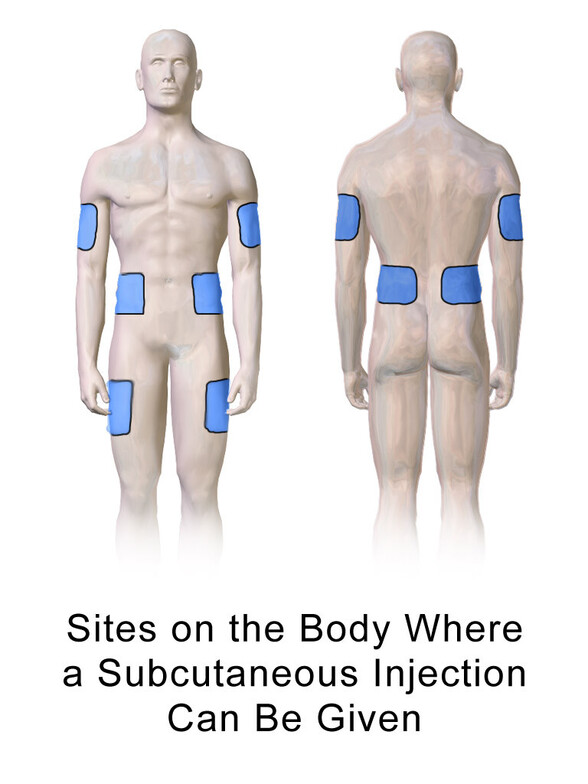
For most pediatric somatropin products, growth hormone is administered as a subcutaneous injection, meaning the medication is placed into the fatty tissue just underneath the skin rather than deeply into muscle. Approved injection locations vary somewhat by product and device, which is why families should always follow the instructions supplied with their child's specific medication. For example, GENOTROPIN labeling identifies the thigh, buttocks, and abdomen as subcutaneous injection areas and specifically recommends rotating injection sites to reduce the risk of local tissue changes.
The most important principle is simple:
Use an approved area with adequate subcutaneous tissue and rotate where the injection is placed.
Site rotation can make injections more comfortable while helping prevent changes in the fatty tissue underneath the skin.
This guide explains how parents can approach pediatric HGH injection sites, rotation, common reactions, and injection comfort as part of a safe HGH for Children to Grow Taller treatment plan.
Where Is Growth Hormone Injected in Children?
Pediatric growth hormone is generally administered into subcutaneous fatty tissue.
Depending on the somatropin product and delivery device, commonly used areas may include:
- Abdomen
- Thigh
- Buttock/hip area
- In some products, the upper arm
Importantly, not every manufacturer's instructions list exactly the same sites. Pfizer's current GENOTROPIN information, for example, specifies the thigh, buttocks, or abdomen.
Parents should therefore follow the manufacturer's Instructions for Use and the training provided by their prescribing healthcare team rather than assuming that every growth hormone pen is administered identically.
Why HGH Is Usually Given Into Fatty Tissue
Subcutaneous tissue is the layer of fat located between the skin and underlying muscle.
Somatropin is formulated for gradual absorption after subcutaneous administration. Pfizer's pharmacology information notes that subcutaneously administered GENOTROPIN is absorbed more slowly than intravenously administered growth hormone.
Using the correct tissue layer helps provide predictable administration while avoiding unnecessary deep injection into muscle.
For parents, this is one reason the "best" injection site isn't necessarily the same location for every child.
A very lean child may have more usable tissue in one area than another.
1. Abdomen
The abdomen can be a convenient injection site in children who have adequate subcutaneous tissue.
Parents should use only the abdominal area approved in the Instructions for Use for their child's medication and avoid injecting immediately adjacent to the belly button.
Advantages may include:
- Easy visibility
- Easy access
- Multiple locations available for rotation
Some children dislike abdominal injections, while others find them easier than thigh injections.
Comfort is individual.
2. Thigh
The thigh is another commonly used location for pediatric growth hormone injections and is specifically listed for GENOTROPIN administration.
Parents often find the thigh convenient because:
- The child can sit during the injection.
- The area is easy to see.
- The left and right thighs provide multiple rotation locations.
Your child's injection training should clarify exactly which portion of the thigh is appropriate for their specific medication and needle system.
3. Buttock or Hip Area
The buttock/hip region may provide ample subcutaneous tissue, particularly in younger or leaner children.
GENOTROPIN labeling includes the buttocks among its approved administration sites.
Some families prefer this area because the child does not have to watch the injection.
However, parents must still rotate injection locations rather than repeatedly using one exact point.
4. Upper Arm
The back or outer upper arm is sometimes used for subcutaneous medications, and some growth hormone products or delivery systems may permit it.
However, parents should not assume the arm is approved for every somatropin product.
Use it only when the child's specific product instructions or prescribing clinician identifies it as an appropriate location.
Very lean children may also have relatively little subcutaneous tissue in the upper arm.
What Is the Best HGH Injection Site for a Child?
There isn't one universal "best" site.
The best site is generally an approved location with sufficient subcutaneous tissue that can be comfortably and reliably rotated.
Factors that may influence the choice include:
- Child's age
- Body composition
- Amount of subcutaneous fat
- Comfort
- Medication/device instructions
- Previous injection reactions
- Ability to rotate locations
Some children strongly prefer one general body area.
That can be acceptable with certain products as long as injections are properly rotated within the approved area according to the medication's instructions.
Why Rotating Growth Hormone Injection Sites Matters
This is one of the most important aspects of administering HGH.
Repeatedly injecting the exact same location can cause changes in the fatty tissue.
FDA-approved somatropin labeling warns that repeated administration into the same area over long periods can cause lipoatrophy, or loss/thinning of fatty tissue, and recommends rotating sites to reduce this risk. This warning appears in labeling for products including NORDITROPIN and ZOMACTON.
GENOTROPIN similarly instructs patients to rotate subcutaneous injection sites daily.
What Is Lipoatrophy?
Lipoatrophy refers to localized loss of subcutaneous fat.
It may appear as:
- A small indentation
- A shallow depression
- Uneven skin contour
Somatropin labeling recognizes lipoatrophy as a possible consequence of repeatedly injecting the same site.
Rotation gives previously injected tissue time to recover and reduces repeated exposure to one tiny area.
Should Parents Rotate the Entire Body Every Night?
Not necessarily.
"Rotate injection sites" does not always mean:
Monday = stomach
Tuesday = thigh
Wednesday = buttock
Thursday = arm.
The exact rotation plan should follow the child's medication instructions.
In practical terms, families typically need to ensure that the same exact spot isn't repeatedly used.
A healthcare professional can help families establish a rotation pattern based on the approved sites for their particular HGH product.
A Simple Way to Remember Injection Rotation
Parents often find it helpful to divide approved areas into smaller zones.
For example, if the thighs are being used according to the product instructions, families might alternate:
- Right thigh
- Left thigh
- Different approved location within the right thigh
- Different approved location within the left thigh
A calendar or medication log can make rotation easier.
The goal isn't to create an overly complicated system.
It's simply to prevent repeatedly injecting the same small patch of tissue.
Does the HGH Injection Site Affect Treatment Results?
When an approved subcutaneous site is used properly, treatment effectiveness should not depend on parents finding a single "perfect" location.
More important factors include:
- Correct prescribed dose
- Correct device use
- Proper medication storage
- Consistent administration
- Appropriate treatment monitoring
- Site rotation
Children receiving HGH therapy monitoring labs in children also need continued clinical follow-up rather than focusing exclusively on injection technique.
Do HGH Injections Hurt?
Most modern growth hormone delivery devices use very small needles, but children still vary significantly in how they experience injections.
Some report very little discomfort.
Others may initially experience:
- Brief stinging
- A small pinch
- Anxiety before injections
- Mild temporary soreness
Often, the anticipation of the injection becomes harder than the injection itself.
Maintaining a calm, predictable routine can help.
How Can Parents Make HGH Injections Easier?
Keep the Routine Predictable
Giving medication at the prescribed time and incorporating it into an established routine can reduce anxiety.
For example:
Dinner → shower → brush teeth → medication → bedtime.
Children often feel more comfortable when they know what is going to happen.
Let the Child Have Appropriate Choices
Children may feel less anxious if they can choose between two approved rotation sites.
For example:
"Would you rather use the left thigh or the right thigh tonight?"
This gives the child some control without changing the medical plan.
Avoid Making the Injection a Major Event
Long discussions immediately before the shot can sometimes increase anticipation.
A calm and consistent approach tends to work better for many families.
Follow the Device Instructions Carefully
Different HGH pens have different:
- Priming requirements
- Dose-setting mechanisms
- Needle instructions
- Hold times
- Storage requirements
Parents should never assume that instructions for one growth hormone device apply to another.
Should Growth Hormone Be Injected at a 45- or 90-Degree Angle?
There is not one universal angle that parents should apply to every pediatric HGH device.
Needle length, device design, body composition, and manufacturer instructions matter.
For this reason, parents should use the injection technique demonstrated for their child's specific device rather than following generic internet instructions.
This is an area where individualized teaching is safer than a universal rule.
Should You Pinch the Skin?
Whether skin should be gently pinched can depend on:
- Needle length
- Injection device
- Child's body composition
- Manufacturer instructions
- Injection location
A very thin child may require different technique than a child with more subcutaneous tissue.
Your prescribing team or medication educator should demonstrate the appropriate technique before treatment begins.
Why Growth Hormone Can Leak Out After the Injection
Parents sometimes notice a tiny drop of liquid after removing the needle.
Possible reasons include:
- Removing the needle too quickly
- Device technique
- Movement during the injection
Many pen systems instruct users to keep the needle under the skin for a specific number of seconds after the dose has been delivered.
Follow the exact Instructions for Use for your child's device.
If medication leakage happens repeatedly or you're uncertain whether your child receives the full prescribed dose, contact the prescribing team rather than automatically administering additional medication.
What If There Is a Drop of Blood?
A very small spot of blood can occasionally occur with a subcutaneous injection.
This does not necessarily mean anything went wrong.
Parents can gently apply pressure with clean gauze if needed.
Persistent bleeding, significant bruising, or unusual reactions should be reported to the child's healthcare provider.
What If the Injection Site Turns Red?
Mild localized redness can occasionally occur after injectable medications.
Somatropin product labeling recognizes injection-site reactions and rashes among possible adverse effects.
Parents should monitor:
- How large the reaction becomes
- How long it lasts
- Whether it happens after every injection
- Whether there is swelling
- Whether the site is painful
- Whether hives or other symptoms appear elsewhere
A tiny temporary area of redness is different from a large or progressively worsening reaction.
When Should Injection-Site Redness Be Reported?
Contact the prescribing clinician if your child repeatedly develops:
- Large red areas
- Significant swelling
- Persistent itching
- Pain
- Firm lumps
- Warmth
- Skin changes lasting unusually long
Seek urgent medical attention for symptoms of a serious allergic reaction such as difficulty breathing, facial or throat swelling, or widespread hives.
Somatropin labeling notes that local and systemic allergic reactions are possible and that prompt medical attention may be necessary for allergic reactions.
What If a Lump Develops?
Repeated injections into the same location can cause local tissue changes.
If parents notice:
- An indentation
- Persistent swelling
- Thickened tissue
- A firm area
- Recurrent irritation
that site should be assessed by the prescribing healthcare team.
Avoid repeatedly injecting into abnormal or irritated tissue until the clinician has advised how to proceed.
Is Bruising Normal After an HGH Injection?
A small bruise can occasionally occur when a tiny blood vessel is encountered.
Frequent or large bruises should be discussed with the child's healthcare provider, particularly if the child bruises easily elsewhere.
Injection technique may also need to be reviewed.
Should HGH Be Injected Into Muscle?
Pediatric somatropin products intended for subcutaneous administration should be administered according to their prescribing information.
GENOTROPIN, for example, is specifically intended for subcutaneous administration.
Parents should not intentionally change the route of administration unless instructed by the prescribing clinician for the specific medication.
Can Parents Use the Same Needle More Than Once?
Needle reuse should be avoided when the device instructions specify a new needle for each injection.
Used needles can:
- Become dull
- Increase discomfort
- Become contaminated
- Increase infection risk
Always follow the manufacturer's Instructions for Use.
Used needles should also be placed directly into an appropriate sharps container according to local disposal requirements. Novo Nordisk notes that injectable-product instructions direct patients to appropriate sharps disposal practices and applicable local laws.
What If My Child Is Afraid of HGH Injections?
Needle anxiety is extremely common, especially at the beginning.
Parents can help by:
- Remaining calm
- Avoiding threats or punishment
- Keeping the procedure brief
- Giving age-appropriate choices
- Using positive reinforcement
- Allowing older children gradual participation
- Asking the care team for additional injection training if needed
Children should never be expected to independently administer their medication simply because they reach a certain age.
Readiness matters more than a specific birthday.
Can Older Children Give Their Own Growth Hormone Injections?
Some adolescents can learn to self-administer growth hormone under appropriate adult supervision and instruction.
Before transitioning to self-injection, the family should ensure the child can reliably:
- Identify the medication
- Set the correct prescribed dose
- Choose an approved site
- Rotate appropriately
- Use the device correctly
- Dispose of the needle safely
- Store medication correctly
Parents should continue overseeing treatment until both the family and prescribing clinician are confident the child can manage it safely.
How Important Is Consistency With HGH Treatment?
Growth hormone therapy generally occurs over months or years rather than days.
Treatment response depends on many factors, including:
- Diagnosis
- Age
- Bone age
- Growth plates
- Dose
- Pubertal stage
- Treatment adherence
- Individual biological response
Our guide to Growth hormone treatment expectations for parents helps families understand why height changes should be evaluated over months rather than from week to week.
Similarly, How long before a child grows taller after starting treatment explains why families shouldn't expect dramatic visible height changes immediately after beginning therapy.
When Do Parents Usually Notice Growth?
Response varies considerably.
Some children demonstrate measurable improvement in growth velocity during the first several months, while other children respond more gradually.
Treatment should be evaluated using objective measurements rather than visual impressions.
Useful measurements include:
- Height
- Annualized height velocity
- Height percentile
- IGF-1 when clinically appropriate
- Bone age when indicated
Parents interested in expected response can review Growth hormone 6 month progress in kids and First year growth hormone height gain for a broader discussion of treatment timelines.
Why Injection Technique Is Only One Part of HGH Treatment
Learning how to give the injection correctly is important, but successful pediatric growth hormone care involves much more.
Children should also receive:
- Appropriate diagnosis
- Growth chart monitoring
- Height velocity assessment
- Puberty evaluation
- Laboratory monitoring
- Bone-age assessment when indicated
- Dose adjustment when appropriate
- Side-effect monitoring
Families considering treatment should first understand when HGH is prescribed for children and who qualifies for growth hormone therapy in a child rather than viewing HGH as simply an injectable height medication.
HGH Injection Sites and Growth Hormone Deficiency
Children diagnosed with Growth Hormone Deficiency may receive recombinant human growth hormone to replace inadequate endogenous GH production.
However, not every short child has growth hormone deficiency.
Short stature may also result from:
- Idiopathic Short Stature
- Constitutional Growth Delay
- Delayed Bone Age
- Poor Growth Velocity from another cause
- Small for gestational age
- Genetic conditions
- Chronic illness
The reason for treatment should therefore be established before focusing on injection technique.
What Parents Should Know About HGH Safety
FDA-approved somatropin has decades of pediatric use, but treatment requires medical supervision.
Potential issues that require clinical monitoring include:
- Injection-site reactions
- Changes in glucose metabolism
- Intracranial hypertension
- Thyroid abnormalities
- Slipped capital femoral epiphysis
- Progression of scoliosis during rapid growth
- Pancreatitis in rare cases
FDA labeling for somatropin products specifically warns clinicians to evaluate children who develop a limp or hip/knee pain during therapy, among other important precautions.
Parents can learn more in Risks of growth hormone therapy in kids and Is growth hormone safe for kids.
When Should Parents Call Their Child's Growth Hormone Provider?
Contact your child's healthcare team if:
- You are uncertain where to inject.
- You believe the wrong dose was administered.
- Medication repeatedly leaks from the injection site.
- Large injection-site reactions occur.
- A persistent lump or indentation develops.
- Your child develops significant pain.
- The medication looks abnormal.
- You are unsure whether it has been stored correctly.
- Your child repeatedly refuses injections.
- You need additional training on the device.
Never guess when there is uncertainty about the medication dose or delivery system.
A Simple Parent Checklist Before an HGH Injection
Before administering prescribed growth hormone, confirm:
- Correct child
- Correct medication
- Correct prescribed dose
- Medication has been stored according to its instructions
- Device is functioning normally
- Solution appears appropriate according to product instructions
- New needle is used when required
- Approved injection site is selected
- Site is being rotated
- Skin is appropriate for injection
- Sharps container is available
For GENOTROPIN, Pfizer specifically advises visually inspecting the medication and not injecting it when the solution is cloudy or contains particulate matter.
Final Thoughts
Giving a child growth hormone injections becomes much easier once families develop a consistent routine.
The most important injection-site principles are straightforward:
Use an approved subcutaneous location. Rotate sites. Avoid repeatedly injecting abnormal or irritated tissue. Follow the instructions for the exact growth hormone device your child has been prescribed.
There is no single body location that every child must use, and the Instructions for Use can differ between products.
Parents should also remember that injection technique is only one piece of successful growth hormone treatment. Proper diagnosis, dosing, growth monitoring, bone-age assessment, laboratory follow-up, adherence, and side-effect surveillance are equally important.
If something about an injection doesn't look right—or your child develops persistent redness, swelling, pain, lumps, or tissue changes—contact the prescribing healthcare team rather than trying to solve the problem by repeatedly changing technique at home.
The goal is not simply to get the injection done each night.
The goal is to make treatment safe, consistent, comfortable, and medically monitored throughout the child's growing years.
Medically Reviewed By
Dr. Devin Stone, ND
Dr. Devin Stone is a Doctor of Naturopathic Medicine and founder of HGHforChildren.com. His clinical focus includes pediatric growth optimization, growth hormone deficiency, delayed bone age assessment, constitutional growth delay, IGF-1 evaluation, and evidence-informed therapies designed to help children maximize healthy growth potential.
References
- Pfizer Medical Information. GENOTROPIN (somatropin) Dosage and Administration. GENOTROPIN is administered subcutaneously, with the thigh, buttocks, and abdomen identified as injection sites and daily rotation recommended to reduce lipoatrophy.
- Pfizer Medical Information. GENOTROPIN Patient Information. Provides administration and injection-site guidance for patients and caregivers.
- U.S. Food and Drug Administration. NORDITROPIN Prescribing Information. Warns that repeated subcutaneous administration at the same site may lead to tissue atrophy and advises site rotation.
- U.S. Food and Drug Administration. ZOMACTON Prescribing Information. Advises rotating injection sites to reduce the risk of lipoatrophy.
- Pfizer Medical Information. GENOTROPIN Clinical Pharmacology. Describes absorption following subcutaneous administration.
- FDA somatropin labeling. Recognizes injection-site reactions, lipoatrophy, and other adverse effects requiring appropriate monitoring.
- iGrow Clinic. HGH Injection Sites in Children: A Parent's Visual Guide. Reviewed as a competitive content benchmark; the present article expands the topic with product-specific safety distinctions, site-reaction guidance, monitoring, and broader treatment context.
Devin Stone
Contact Me


Frequently Asked Questions
HGH Injection Sites in Children FAQs
Commonly approved subcutaneous sites include the abdomen, thigh, and buttocks, although approved locations depend on the specific somatropin product. GENOTROPIN labeling specifically lists the thigh, buttocks, and abdomen.
You should follow your child's product instructions, but repeatedly injecting the exact same spot should be avoided. Somatropin labeling recommends site rotation to reduce the risk of localized loss of fatty tissue.
Repeated injections into the same location can produce localized changes in subcutaneous tissue, including lipoatrophy.
Parents should not choose injection sites based on the assumption that one approved location will necessarily produce superior height results. Use the approved sites and technique provided for the child's specific product.
Mild temporary irritation can occur, and injection-site reactions are recognized adverse effects of somatropin. Large, persistent, painful, or recurrent reactions should be evaluated.
A persistent indentation may represent localized loss of fatty tissue. Stop repeatedly using that exact area and have the prescribing team assess it. Somatropin labeling recognizes lipoatrophy with repeated same-site administration
Some products or devices may permit upper-arm administration, while others specify different sites. Follow the manufacturer's Instructions for Use for the specific growth hormone your child has been prescribed.
Follow the prescribed administration schedule for your child's particular product. Traditional daily somatropin and newer long-acting growth hormone products can have different schedules, so families should not apply one dosing routine to every medication.
